0
Subtotal

Multiband saturation · The flagship v1.10.1
Two cores. One decision.
Split the signal at a crossover you choose and drive each band through its own saturation core: seven characters, gain match so you judge tone rather than level, and a residual monitor to hear exactly what is added.
$69 founders’ price through 30 November, then $99. Version 1.10.1.
macOS: Audio Unit, VST3, AAX and Standalone. Windows: VST3 and Standalone. Activates through RSL Hub on up to 4 computers.
Most saturation pushes the whole signal through one circuit, and the low end takes the hit first. This one splits it, gives each side its own, and lets you hear exactly what it adds.
Each clip runs dry, then through one factory preset. Both sides are matched in loudness, so what changes is the tone, not the volume. Flip the switch while it plays.
Preset Punch Glue
0:000:11
Drum bus Punch Glue
Before
After
808 Phone Speaker
Before
After
Mix bus Tape Master
Before
After
Master Red Glue
Before
After
From beats produced by Mev. Rendered with the plugin’s own engine, version 1.10.1.
This plugin is crazy! It gets everything I want loud, and in the best way.
Having precise control over two distinct saturation cores is an absolute game-changer. You get that extra punch and energy without muddying up the low end or killing your mix’s natural dynamics and audio quality.
Already on released records. The RudeboyFinesse albums RUDESUMMER and STILLSUMMER were mastered with this plugin.
The window in the middle of the faceplate shows the circuit you have chosen: a valve pair for Tube, a tape transport for Tape, a liquid gain cell for Ionic. The harmonic display beside it shows what that circuit is adding, as it plays.
Gain Match holds the level while you switch, so you hear the character, not the volume. Residual plays only what is being added.

Drive sets how hard the circuit works. Depth changes how far it is allowed to go, so what it does depends on the character. How each one works

For cohesion rather than an effect anyone can name.
Best for Bus glue, vocals, broad cohesion

Even-order color that gets less clinical the harder you push it.
Best for Vocals, bass, drums and buses

Drive walks the signal up to the edge. Depth decides how firm that edge is.
Best for Peak shape, aggressive drums, loudness

Stable tape, not damaged lo-fi tape, at 30 or 60 IPS.
Best for Density and glue with movement

Sustained sound changes what the next transient runs into.
Best for Weight with movement, low-mid character

Not a waveform shaper. It moves level, then blends the difference.
Best for Density and control without obvious distortion

For when the record wants something broken on purpose.
Best for Aggressive color and deliberate instability
One crossover, two saturation cores, and one output stage they share. Scroll and each section lights up in turn.

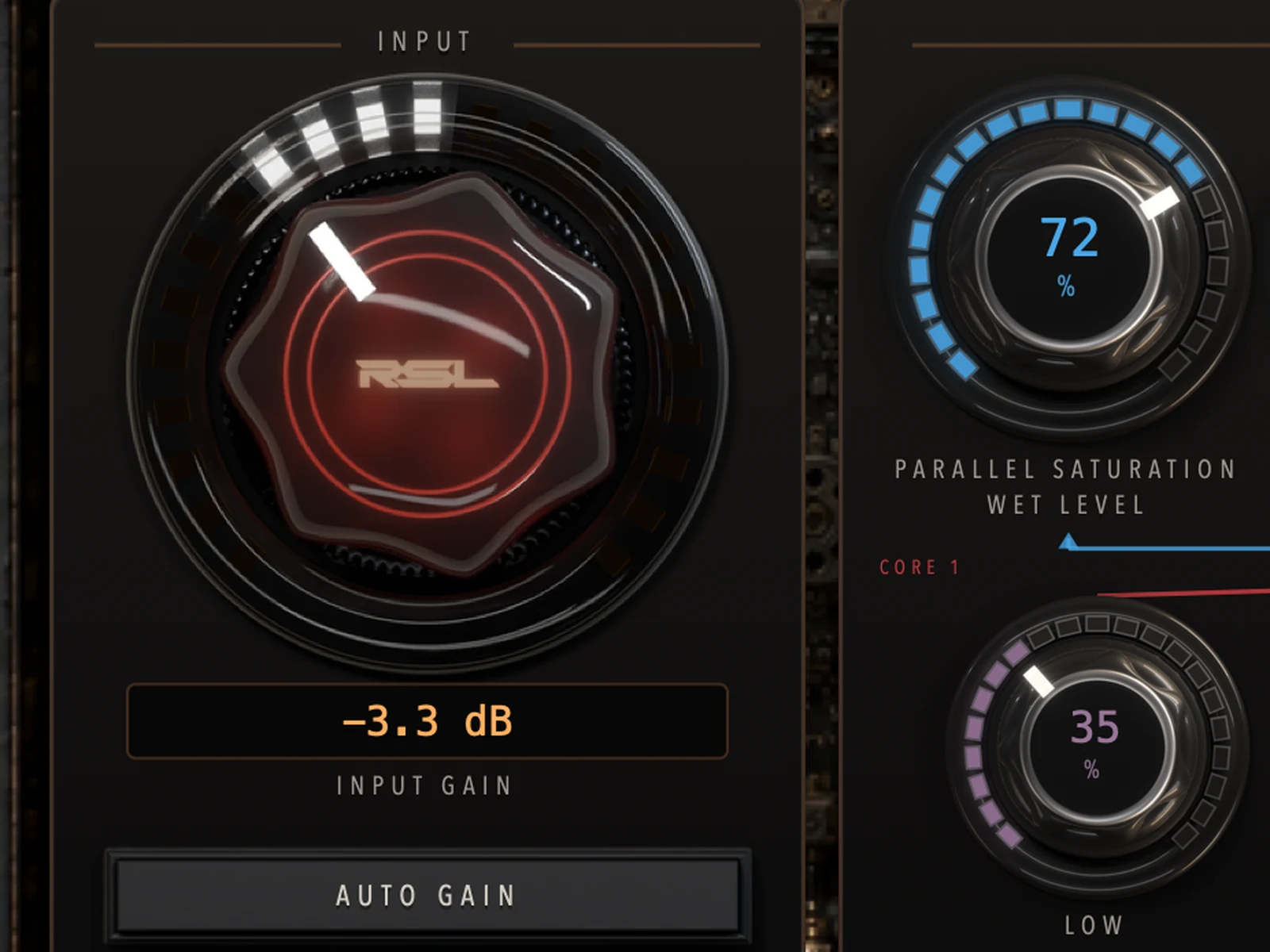
Input gain sets how hard the signal arrives. Its LEDs light out from 0 dB and its cap glows with the level. Auto Gain turns Output the other way as you turn Input, so pushing the input never just makes it louder.

A restrained Warm stage divides the spectrum at one crossover. Place it on the analyzer, then give the low and high regions their own amount with Low and High, so the bottom stays composed while the top is pushed.

Core 2 is the parallel engine. Pick one of seven characters, and the window shows the circuit you chose. The two blue handles on the analyzer set the band it works on, and anything outside that band is left alone.

Core 2 adds the difference, never a redrawn copy: it isolates the band, processes it, subtracts the original and blends what is left. Wet sets how much joins your dry signal; Depth, Density and Drive shape what the character does.

Tilt trades body against air. Focus moves the effect between mid and side. Console switches in the console treatment on the way out.

The Blue and Red transformers voice the output stage, Voltage adds left and right drift, and Ceiling holds true peak where you set it. Gain Match and Residual let you judge the tone at the same level, or hear only what is being added.
Voiced through the engine itself on real drums, bass, 808s and mixes, and level-matched so a preset changes the tone, not the volume. Mastering presets hold true peak under −1 dBTP; Experimental ones are extreme on purpose. Every earlier preset is still there, in the General, Ferro, Ionic, VO2 and Tape folders.
| Preset | What it does |
|---|---|
| Punch Glue | Warm glue for a drum bus: density and cohesion without moving the balance. |
| Snare Crack | Clip core on the upper mids: crack and presence on snares and claps. |
| Kick Weight | Ferro iron on the low end: weight and chest on kicks, top left alone. |
| Tape Kit | Tape on the whole kit: rounded transients, a little head bump, softer top. |
| Ionic Punch | Ionic memory on the drum bus: hits bloom and jump forward, more punch. |
| Dusty Break | VO2 grit and body on a break: sampled-dust texture. |
| Red Snap | Warm core into the Red transformer: snap and midrange tone, punch intact. |
| Hat Silk | Saturation only above about 2.5 kHz: silk and sheen on hats and cymbals. |
| Tube Bus Warmth | Tube on the drum bus: warm, even-led glue that rounds the hits a little. |
| Tube Snare Body | Tube above 150 Hz: thicker snare body and ring, attack kept. |
| Preset | What it does |
|---|---|
| Small Speaker | Harmonics in the 200 Hz-3 kHz range so the bass reads on laptops and phones. |
| Warm Round | Gentle warmth and evenness, no added edge. |
| Tape Bottom | Tape head bump: fat, even bottom with a softer top. |
| Growl | Clip core for a forward, growling midrange that cuts through a dense mix. |
| Ferro Body | Iron saturation in the low mids: body and density. |
| Blue Sub | Blue transformer: low even harmonics and a whisper of sub under the note. |
| Tube DI | A tube DI: second-harmonic warmth on the note, nothing fizzy. |
| Tube Push | A driven tube amp: the bass pushes forward into the midrange. |
| Tube Round | Tube with the top softened: round, dark and even. |
| Tube Thick | Tube with density up: a thicker, steadier note, balance intact. |
| Preset | What it does |
|---|---|
| Phone Speaker | Upper harmonics so the 808 is heard on phones and laptops, with the sub kept. |
| Clean Weight | Light warmth and evenness: weight without audible distortion. |
| Distorted | Hard clipped, distorted 808 for trap and drill. |
| Tape Boom | Tape boom: head bump, rounded attack, long even tail. |
| Glide Grit | VO2 grit that shows on glides and slides. |
| Iron Sub | Ferro density with the sub intact: thick, solid, mids pushed forward. |
| Blue Weight | Blue transformer: low even harmonics and period-doubled sub, a heavier floor. |
| Tube Warmth | Tube warmth on the 808: harmonics that carry it, sub untouched. |
| Tube Bloom | Tube body on the 808: a warmer, rounder low end. |
| Tube Overdrive | An overdriven tube: thick, rounded distortion that reads on small speakers. |
| Preset | What it does |
|---|---|
| Transparent Weight | Barely there: a little density, no tonal change. |
| Tape Master | Half-inch mastering tape: a little low-end bump and a softer top. |
| Loud Clip | Clip-core harmonics across the mix: denser and more forward ahead of a limiter. |
| Ionic Lift | Ionic on the mix: a little more transient life and openness, tone intact. |
| Iron Master | Iron weight on the mix: low-end density and solidity. |
| Air Sheen | Saturation only above about 3 kHz: top-end sheen and openness. |
| Red Glue | Warm core into the Red transformer: mix-bus cohesion and a touch of midrange warmth. |
| Tube Glow | A mastering tube stage: even-harmonic glow, tone intact. |
| Tube Body | Tube weight in the low mids: a fuller, warmer master. |
| Tube Silk Top | Tube only above about 3 kHz: silky, smooth top end. |
| Preset | What it does |
|---|---|
| Octave Ghost | VO2 in the metallic phase: octave-up ghosting from the rectified domains. |
| Sputter Machine | VO2 in chaos: sputtering and period-doubled subharmonics. |
| Ferro Collapse | Ferro field pushed until it comes apart. |
| Swell Memory | Ionic memory at maximum: exaggerated swell and bloom on every hit. |
| Broken Reel | Tape pushed into its soft ceiling with the rails drifting: a worn, saturated reel. |
| Wide Burn | Side-heavy clipping with rail drift: a wide, burning stereo field. |
| Air Shred | Clipping only the top octaves: shredded, fizzy air. |
| Mid Melt | Clip meltdown confined to 300 Hz-2 kHz, mid channel only, into the Red transformer. |
| Tube Breath | Tube sag at maximum with drifting rails: the whole signal breathes with the level. |
| Tube Overload | Tube driven flat out: as thick and saturated as a tube goes, still even-led. |
How to get it
Own it
$69once
Founders’ price, then $99. Yours to keep, with its updates.RSL All Access
$15/ mo, billed yearly
Every RSL plugin and every new one, with every update. No card for the trial. Or $18 monthly.RSL Complete
$349once
Founders’ price, then $449. Every current plugin; new ones are not included.On macOS it needs 11 or newer, and the build is Universal 2 so it runs natively on Intel and Apple Silicon with no Rosetta translation. On Windows it needs 10 64-bit or newer, including Windows 11, on a 64-bit Intel or AMD machine. There is no native Windows-on-ARM build, and there is nothing else to install: no Visual C++ redistributable is needed.
On macOS, Audio Unit, VST3, AAX for Pro Tools and a Standalone application. On Windows, VST3 and a Standalone application. There is no VST2 build, and Audio Unit is a macOS format only. One purchase covers both platforms.
Yes, on macOS. The macOS installer includes AAX alongside Audio Unit, VST3 and Standalone, so Pro Tools loads it. AudioSuite is not included, on purpose: Ferro, Ionic and Tape warm up over several seconds, so an offline render of a short selection would not match what the same settings do while playing. The Windows download does not include AAX yet.
Yes, and it is expected. The Windows installer is not code signed yet, so Microsoft Defender SmartScreen warns you the first time you run it. Choose More info, then Run anyway. The macOS build is unaffected.
Up to 4, through RSL Hub, our free app: free one up in RSL Hub or under Activated computers on your account page. License keys bought before 4 October 2026 keep their 3-computer limit.
Open RSL Hub, sign in with your Renegade Sound Labs account and choose Install. It activates by itself, with no key to type, and RSL Hub renews the activation in the background. The installers are also kept under Downloads in your account.
Yes. License keys keep working. From version 1.9.2 you can also activate by signing in to RSL Hub with your Renegade Sound Labs account, instead of typing the key.
It returns to $99. Buying at the founders’ price is a one-time payment, not a subscription.
Yes. RSL All Access is every RSL plugin, this one included, for $18 a month or $180 a year, with a 30-day free trial and no card needed. Cancel any time. Plugins you buy stay yours.
$69 founders’ price through 30 November, then $99. Or get it with every other RSL plugin in All Access.
For the hits themselves, put the free RSL DawgBox on the drums first. On the master bus, finish with RSL Master.
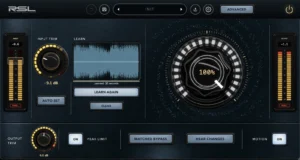
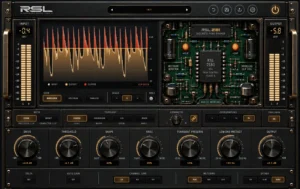
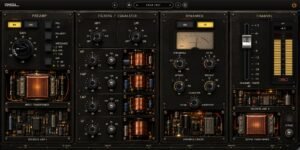
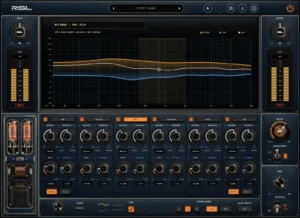 RSL All AccessEvery RSL plugin. One subscription.All 6 plugins and every new one we make, installed through RSL Hub on up to 4 computers.$15/mo, billed $180 yearly 2 months freeStart your free trialSee plansOr $18 monthly · 30 days free, no card · Cancel anytime
Or own a plugin outright
All included in All Access →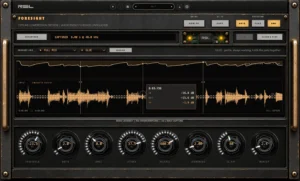 01 · PreviewRSL ForesightSee what a compressor will do before you commit.Free
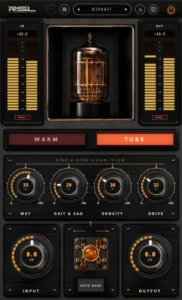 02 · ColorRSL OneWarm and Tube saturation on a single core, free with an account.Free
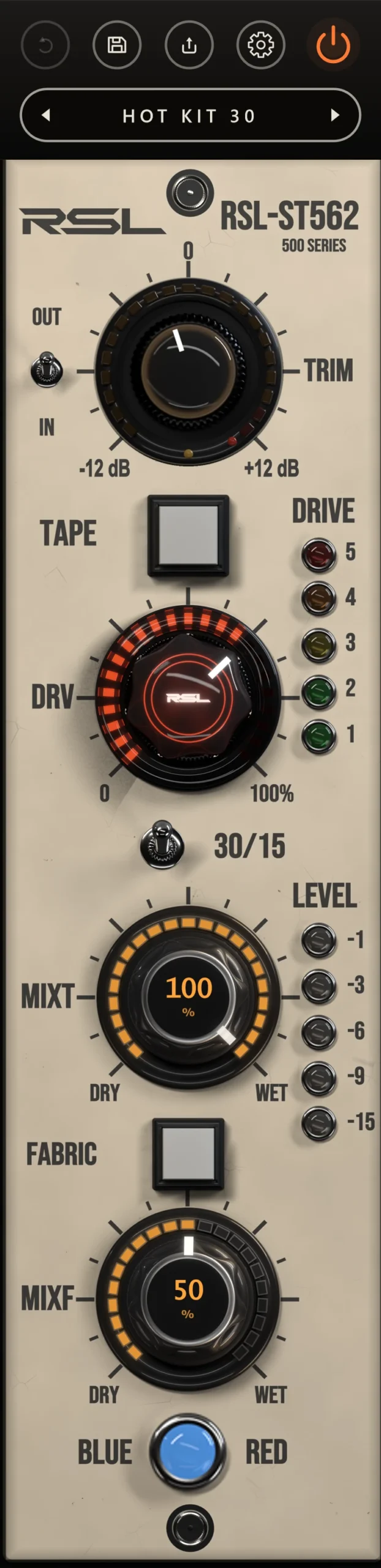 03 · TapeRSL-ST562A 500-series tape strip, as a plugin. Trim, tape at 30 or 15 ips and Fabric harmonics.Free
 04 · PunchRSL DawgBoxDrum enhancer made with Dawgs Dabato. PUNCH, SUB and CLIP.Free05 · FlagshipRSL Dual Core SaturatorMultiband saturation: two cores, split at a crossover you set.$6906 · ControlRSL BastionVari-mu and VCA compression in one chassis.$6907 · FinishRSL MasterOne macro toward a chart-ready master.$6908 · LoudnessRSL CrucibleAnalog peak shaping, CLEAN or IMPACT.$6909 · ConsoleRSL ChannelA full analog channel strip.$6910 · ToneRSL ParadoxBoost and cut at the same frequency.$69SaturationRSL OneWarm and Tube saturation on a single core. Free with an account.FreeCompression previewRSL ForesightSee what a compressor will do before you commit. No account needed.FreeTape stripRSL-ST562A 500-series tape strip, as a plugin. Free to keep.Free
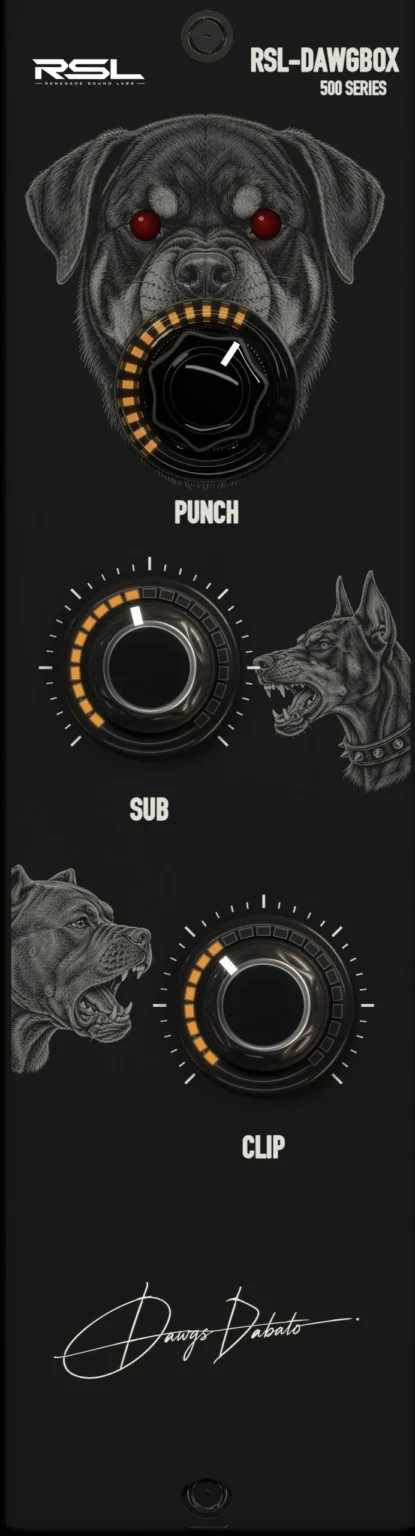 Drum enhancerRSL DawgBoxMade with Dawgs Dabato: PUNCH, SUB and CLIP for drums. Free to keep.Free
 Mastering in the browserRenegade Mastering ConsoleA final-stage mastering enhancer that runs in your browser. Nothing to install.Free
Start here
Free plugins you keep. No trial clock and no card.
 Optimized by Seraphinite Accelerator