0
Subtotal

Dual curve equalizer · Six bands v1.0.5
Tight lows and open highs from one EQ move.
RSL Paradox boosts and attenuates at the same frequency, the classic passive EQ move, on six bands from LOW to AIR. One SHAPE control changes how every curve behaves.
$69 founders’ price through 30 November, then $99. Version 1.0.5.
macOS: Audio Unit, VST3, AAX and Standalone. Windows: VST3 and Standalone. Activates through RSL Hub on up to 4 computers.
On an ordinary equalizer a boost and a cut at the same frequency cancel out. Here they are two curves, so turning both up shapes the band instead.
Each clip runs dry, then through one factory preset. Both sides are matched in loudness, so what changes is the shape, not the volume. Flip the switch while it plays.
Preset Kick Knock
0:000:11
Kick Kick Knock
Before
After
Drum bus Drum Bus Weight
Before
After
808 Small Speaker Bite
Before
After
Mix bus Low End Master
Before
After
From beats produced by Mev. Rendered with the plugin’s own engine, version 1.0.5.
Engineers have leaned on the boost-and-cut trick for decades, but only on the low and high sections of the hardware. Paradox gives the pair of curves to all six bands, each with its own BOOST and ATTENUATE, and the graph draws exactly what the audio is doing.
GAIN MATCH trims the output to what the curves add, so a boost is judged on its shape, not on being louder.

SHAPE decides how every band’s boost and cut sit against each other. Turn it and the whole equalizer re-voices while your amounts stay where they are. These are the same settings at each stop.

The passive trick: the boost lifts underneath while the cut opens a dip just above it, so the low end gets tighter instead of just bigger.

A narrow lift with its surroundings pulled back, so one frequency steps forward without the region around it getting louder.

The boost and the cut lean apart around the frequency, tipping the band rather than lifting it.

A broad lift with a notch in the middle of it: Focus turned inside out.
From INPUT through the six bands and SHAPE, the analog stage and MIX, to OUTPUT. Scroll and each section lights up in turn.

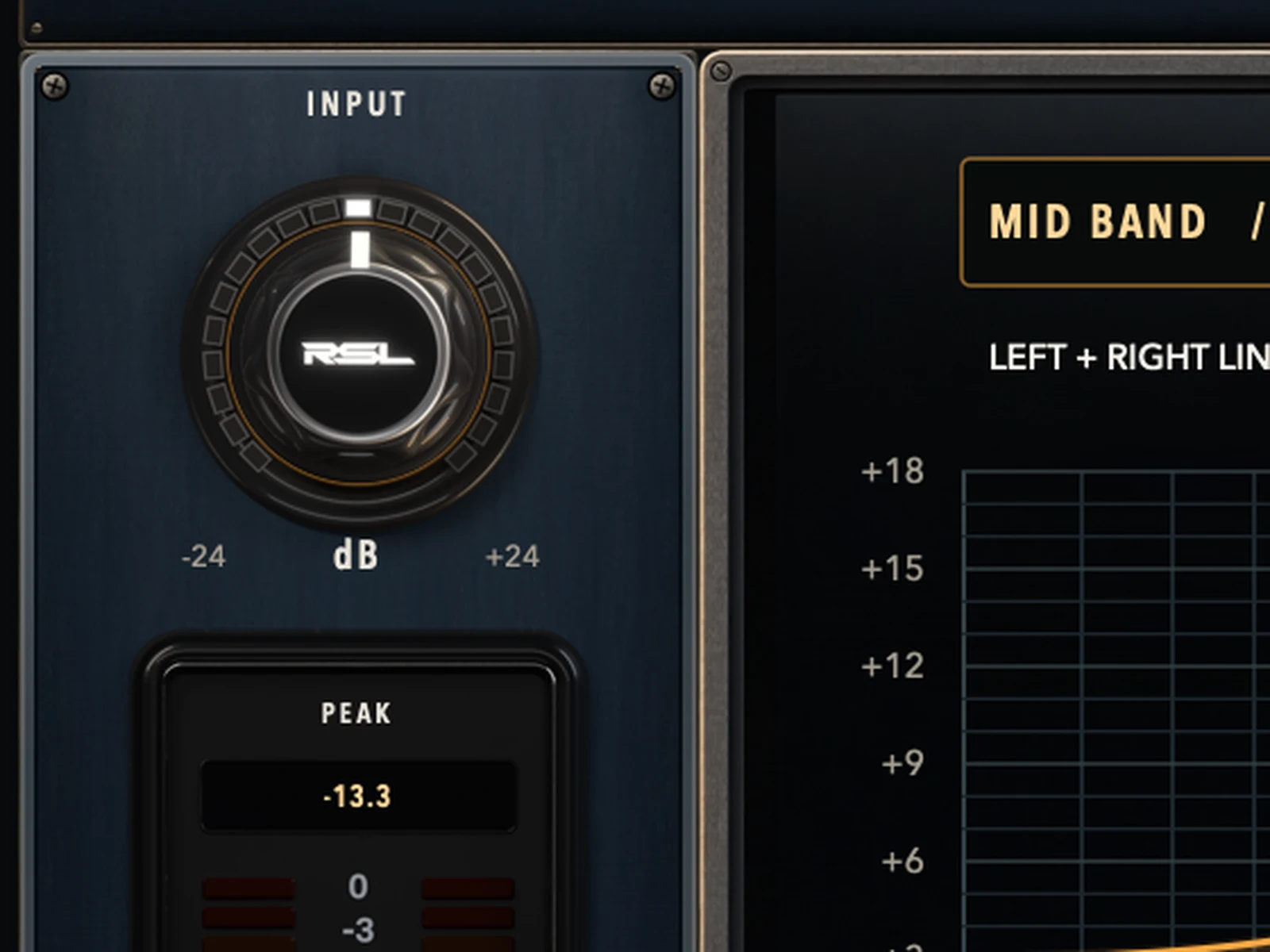
INPUT sets the level going in, from -24 to +24 dB, and with ANALOG MODE on it also sets how hard the circuit is driven. Its knob glows with the signal, over a tall LED meter with a peak readout. Click the meter to clear a clip hold.

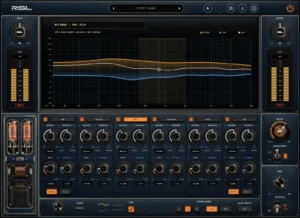
Amber is every boost, blue every cut, and white the sum the audio actually gets. Drag a node to set a band's frequency, boost or cut; hold Shift for fine moves, and double-click to zero a band.

LOW, LOW MID, MID, HIGH MID, HIGH and AIR, each with FREQUENCY, BANDWIDTH, BOOST and ATTENUATE, 0 to 15 dB apiece. White rings for frequency and width, amber for boost, blue for cut, and a band that is switched off goes dark.

One SHAPE knob re-voices all six bands at once: CLASSIC, FOCUS, TILT, HOLLOW or anywhere between, while your amounts stay put. Work left and right or mid and side, linked or one channel at a time.

With ANALOG MODE on, an input transformer sits ahead of the curves, with valve stages and transformers after them. The valves in the bay glow with the signal, and go dark when the stage is switched off.

DRIVE sets how hard the analog stage is hit, and glows from ember to white-hot as you turn it up. MIX blends the equalized signal with the dry one, delay-compensated, EQ BYPASS takes the curves out and leaves the analog stage in, and GAIN MATCH judges a boost on its shape, not its level.
Voiced and level-matched on real vocals, drums, bass, 808s and full mixes, so a preset changes the shape, not the volume. Experimental presets are extreme on purpose. Every earlier preset is still there under its own name.
| Preset | What it does |
|---|---|
| Vocal Forward | Presence up, mud down: the vocal steps in front of the track. |
| Silk Air | Expensive top end on the voice without the 5 kHz harshness. |
| Mud Clear | Clears boxy, muddy low mids from a close-miked vocal. |
| Chest Warmth | Adds chest and warmth to a thin voice. |
| De-Harsh | A wide, gentle cut at the harsh 3.5 kHz region. |
| Rap Upfront | Mid push and bite for rap vocals that have to cut through 808s. |
| Telephone Lo-Fi | Band-limited phone-speaker vocal for intros and hooks. |
| Breathy Pop | Bright, breathy pop-vocal sheen. |
| Analog Vocal Chain | Analog mode with gentle presence and air: a warm, finished vocal chain. |
| Preset | What it does |
|---|---|
| Kick Knock | The low-end trick on the kick: weight at 60 Hz, cardboard scooped out around 350 Hz. |
| Snare Crack | Crack at 2.5 kHz with the ring at 600 Hz pulled back. |
| Open Top | Air shelf that opens the cymbals without adding 6 kHz bite. |
| Boxy Cleanup | A wide cut at the box frequency: the kit sounds bigger and less cardboard. |
| Drum Bus Weight | Low-end trick plus a touch of air: the bus gets heavier and brighter at once. |
| Room Tamer | Pulls the honk and splash out of an ambient room mic. |
| Hat Silk | Silk on top with the 7 kHz sizzle tucked away. |
| Break Dust | Lo-fi break: bottom and top shelved away, the mids pushed like an old sampler. |
| Punch Pocket | FOCUS lift at the kick's punch, scooped around it so it doesn't get muddy. |
| Clap Body | Fills out thin claps and snares around 900 Hz. |
| Analog Kit Glue | Analog mode hit hard with a gentle smile: transformer weight and valve glue on the kit. |
| Preset | What it does |
|---|---|
| Low End Trick | The classic passive trick: boost and cut at 60 Hz for a deep, tight bottom. |
| Growl Lift | Brings the bass's growl forward at 800 Hz and clears the mud under it. |
| Mud Cut | Clears the 250 Hz build-up so the bass and kick separate. |
| String Definition | Finger and string detail at 2 kHz: the notes read clearly in a busy mix. |
| Sub Focus | A focused lift in the true sub: weight you feel on big systems. |
| Warm Round | Rounder and warmer: a little bottom, the top edge softened. |
| Small Speaker Bass | Pushes the harmonics laptops and phones can play, so the line still reads there. |
| DI Smooth | Takes the clank and fizz off a DI bass. |
| Tight Low | Less sub rumble, more of the 140 Hz punch: tighter on small systems. |
| Preset | What it does |
|---|---|
| Sub Foundation | Low-end trick at 50 Hz: a deep, controlled 808 floor. |
| Small Speaker Bite | The upper harmonics phones play, pushed so the 808 is heard everywhere. |
| Clean Sub | Strips the boxy midrange off the 808, leaving the sub clean. |
| Knock 808 | Focused lift at the 808's knock so it punches as well as booms. |
| Phone Translation | Bite at 2 kHz so the 808's note is heard on phone speakers. |
| Round Tail | Takes the click and buzz off the top: a round, smooth 808. |
| Tight Sub | Less woof below 30 Hz, more body at 120: tight on club and car systems. |
| Analog Weight | Analog mode at full drive: transformer weight and valve harmonics on the 808. |
| Hollow 808 | HOLLOW shape in the low mids: a wide lift with a notch carved through it. |
| Preset | What it does |
|---|---|
| Master Silk | A light smile: low-end trick and silk on top. |
| Low End Master | The passive low-end trick on the whole mix: deeper without boom. |
| Mud Control | A gentle wide cut at 300 Hz: clearer without getting thin. |
| Presence Lift | A little 3 kHz presence for mixes that sit back. |
| Tilt Bright | TILT around 1.5 kHz: a lift above, a dip below. Brighter and leaner in one move. |
| Harsh Tamer | Softens 3.5 kHz and 7 kHz edge on bright mixes. |
| M-S Wide Air | Mid/Side: air added to the sides only, the side low end cleaned. Wider, steadier bottom. |
| M-S Low Tidy | Mid/Side: low end out of the sides, so the bottom sits centred. |
| Analog Master | Flat EQ through analog mode: a subtle transformer-and-valve sheen on the mix. |
| Loud Master Curve | The modern loud curve: weight, clarity and air ahead of the limiter. |
| Vocal Pocket | Carves a little room around 1.5 kHz on a beat for the vocal. |
| Warm Tilt | A gentle low lift against a soft top: warmer and darker. (TILT only tilts up, so this uses two bands.) |
| Preset | What it does |
|---|---|
| AM Radio | Band-limited and overdriven like an old AM set. |
| Hollow Space | HOLLOW on three bands at once: phasey, scooped, hollowed-out. |
| Resonant Air | The AIR circuit with boost and cut both maxed: a resonant peak against a shelf. |
| Underwater | Everything above 1.5 kHz drowned: muffled, underwater, next-room. |
| Sides Only Air | Mid/Side: the top taken out of the centre and put in the sides. Huge, unreal width. |
| Notch Comb | Narrow HOLLOW notches: a comb-filtered, flanged colour without modulation. |
| Mid Scoop Extreme | A massive mid scoop: smiley, scooped, metal-guitar extreme. |
| Analog Overdrive | Input slammed into analog mode: the transformers and valves pushed into distortion. |
| Tilt Extreme | TILT at full tilt: the low end dug out and the upper mids thrown forward, a nasal, transistor-radio tone. |
How to get it
RSL All Access
$15/ mo, billed yearly
Every RSL plugin and every new one, with every update. No card for the trial. Or $18 monthly.RSL Complete
$349once
Founders’ price, then $449. Every current plugin; new ones are not included.Not here. On RSL Paradox they are two different curves around the same frequency, so turning both up shapes the band instead of flattening it. SHAPE decides where each one sits.
RSL Paradox runs on macOS 11 or later, on Apple Silicon or Intel, and on 64-bit Windows 10 or later. The current build is v1.0.5 on both.
On macOS you get AU, VST3, AAX for Pro Tools and a Standalone app. On Windows you get VST3 and a Standalone app.
Yes, on macOS, as an AAX plugin. There is no AAX version for Windows yet.
It runs at twice the session rate and reports 46 samples, about a millisecond, which hosts with delay compensation correct automatically. For tracking or playing live, switch on Zero latency in the settings panel and nothing is reported to the host.
Up to 4. RSL Paradox activates through the free RSL Hub app with your Renegade Sound Labs account, so there is no license key to keep track of.
Yes. You can try RSL Paradox free for 30 days before you buy.
The founders’ price of $69 runs through 30 November, then RSL Paradox is $99. Either way it is a one-time purchase, yours to keep with its updates. You can refund it within 14 days of purchase, for any reason.
Yes. RSL All Access includes RSL Paradox for $15 a month billed yearly, or $18 monthly, and starts with a 30-day free trial with no card needed.
$69 founders’ price through 30 November, then $99. Or get it with every other RSL plugin in All Access.
Shape the tone with Paradox, then give it density with the RSL Dual Core Saturator after it.
 RSL All AccessEvery RSL plugin. One subscription.All 6 plugins and every new one we make, installed through RSL Hub on up to 4 computers.$15/mo, billed $180 yearly 2 months freeStart your free trialSee plansOr $18 monthly · 30 days free, no card · Cancel anytime
Or own a plugin outright
All included in All Access →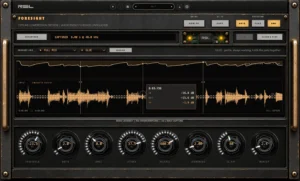 01 · PreviewRSL ForesightSee what a compressor will do before you commit.Free
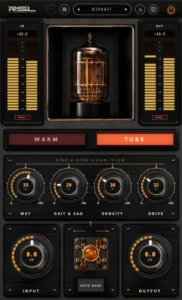 02 · ColorRSL OneWarm and Tube saturation on a single core, free with an account.Free
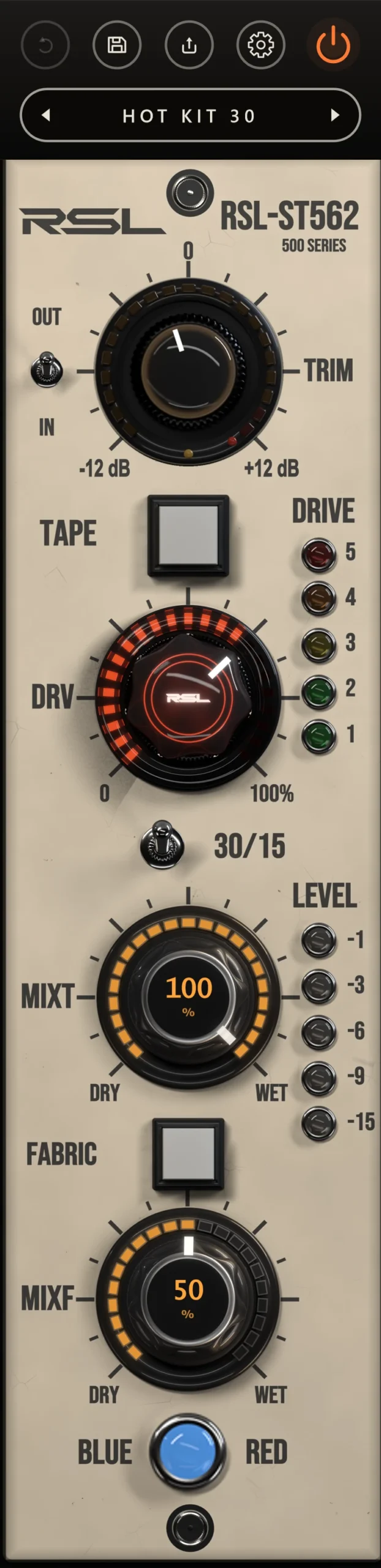 03 · TapeRSL-ST562A 500-series tape strip, as a plugin. Trim, tape at 30 or 15 ips and Fabric harmonics.Free
 04 · PunchRSL DawgBoxDrum enhancer made with Dawgs Dabato. PUNCH, SUB and CLIP.Free05 · FlagshipRSL Dual Core SaturatorMultiband saturation: two cores, split at a crossover you set.$6906 · ControlRSL BastionVari-mu and VCA compression in one chassis.$6907 · FinishRSL MasterOne macro toward a chart-ready master.$6908 · LoudnessRSL CrucibleAnalog peak shaping, CLEAN or IMPACT.$6909 · ConsoleRSL ChannelA full analog channel strip.$6910 · ToneRSL ParadoxBoost and cut at the same frequency.$69SaturationRSL OneWarm and Tube saturation on a single core. Free with an account.FreeCompression previewRSL ForesightSee what a compressor will do before you commit. No account needed.FreeTape stripRSL-ST562A 500-series tape strip, as a plugin. Free to keep.Free
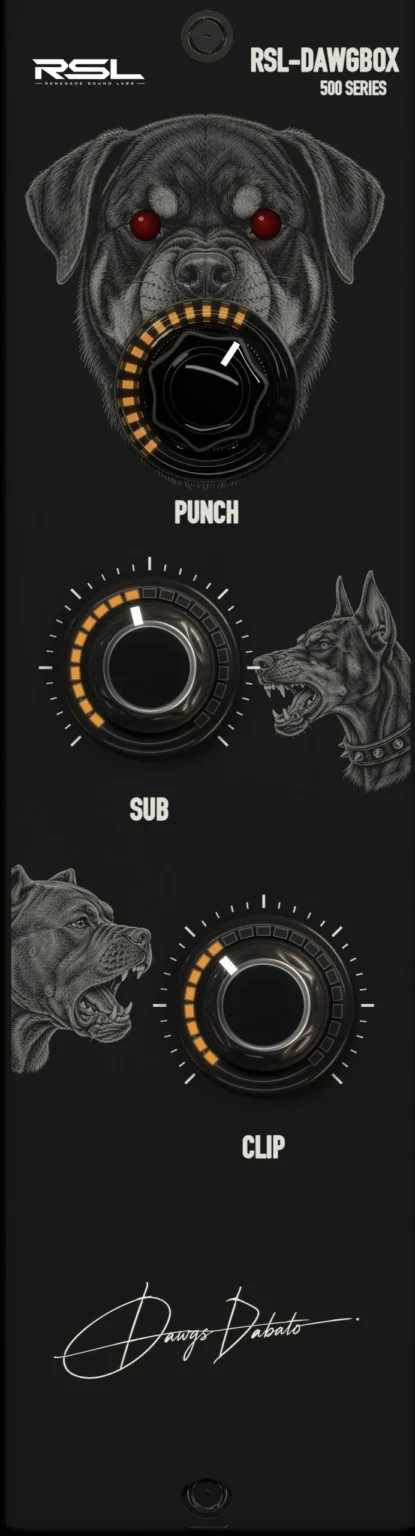 Drum enhancerRSL DawgBoxMade with Dawgs Dabato: PUNCH, SUB and CLIP for drums. Free to keep.Free
 Mastering in the browserRenegade Mastering ConsoleA final-stage mastering enhancer that runs in your browser. Nothing to install.Free
Start here
Free plugins you keep. No trial clock and no card.
 Optimized by Seraphinite Accelerator